 28, 29 & 30
 APRIL 2026
 28, 29 & 30
The Medical Intervention Plan (MIP) organises medical, sanitary and psychological assistance during incidents involving multiple casualties. Its objective is to rapidly establish a structured medical chain in order to provide each victim with the most appropriate care, without disrupting the regular emergency medical services.
The activation of the Medical Intervention Plan (MIP) occurs when an incident causes multiple casualties or when regular medical services risk becoming overloaded. A MIP can be initiated, among others, by the first MUG team (DIR-MED). The formal declaration is always made by the competent NC112, based on the situation report (SITREP) from the field. The NC112 then ensures the alerting and dispatching of the various emergency services and coordinating functions.
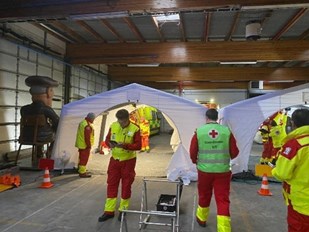
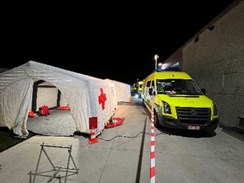
The Forward Medical Post (FMP) forms the centre of the medical chain on site. The FMP is established in the orange zone and serves as the link between the disaster site and hospital transport.
At this location the following activities take place:
The CP-MED or Medical Command Post serves as the back office for the medical services and is linked to the CP-OPS. Here:
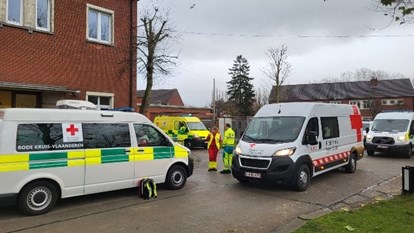
A Red Cross SIM vehicle (Snel Inzetbare Middelen – Rapid Deployment Resources) is a vehicle that quickly transports medical and logistical equipment to the incident site in support of the medical chain. It assists in the establishment of the FMP, the setup of the casualty collection point and provides crucial logistical capacity during collective emergency situations.
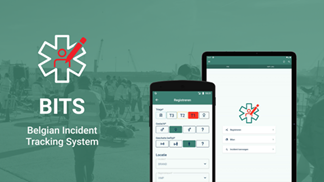
The PSH is part of the Psychosocial Intervention Plan (PSIP) and provides psychosocial support to all people involved during a collective emergency situation. It opens and manages reception centres for uninjured persons, provides emotional and practical support to victims and relatives, assists with registration (including cooperation with BITS) and thereby relieves pressure on the medical chain. The PSH forms an essential component focused on well-being, reception and continuity of care.
Continuously
This demo is part of the crisis management demo, an initiative of the Firefighters’ Association of Flanders in collaboration with the emergency planning department of the Governor of West Flanders.